Electrostatic Discharge and LED Luminaires
An ESD Mitigation Guide for Architectural LED Installations. Introduction. Electrostatic discharge is a leading cause of LED component failure in architectural installations, particularly in bridge a…
An ESD Mitigation Guide for Architectural LED Installations
Introduction
Electrostatic discharge is a leading cause of LED component failure in architectural installations, particularly in bridge and outdoor environments where structural steel, cable stays, and varying weather conditions create conditions for charge buildup. This guide covers the practical steps required to protect LED luminaires from ESD damage, from initial grounding design through ongoing maintenance.
The guidance is organized around three installation scenarios: luminaires on metal stays, luminaires on metal stays with plastic covers, and the grounding foundation that underpins both. Each section identifies the specific risks and the measures that address them.
1. The Foundation: Grounding
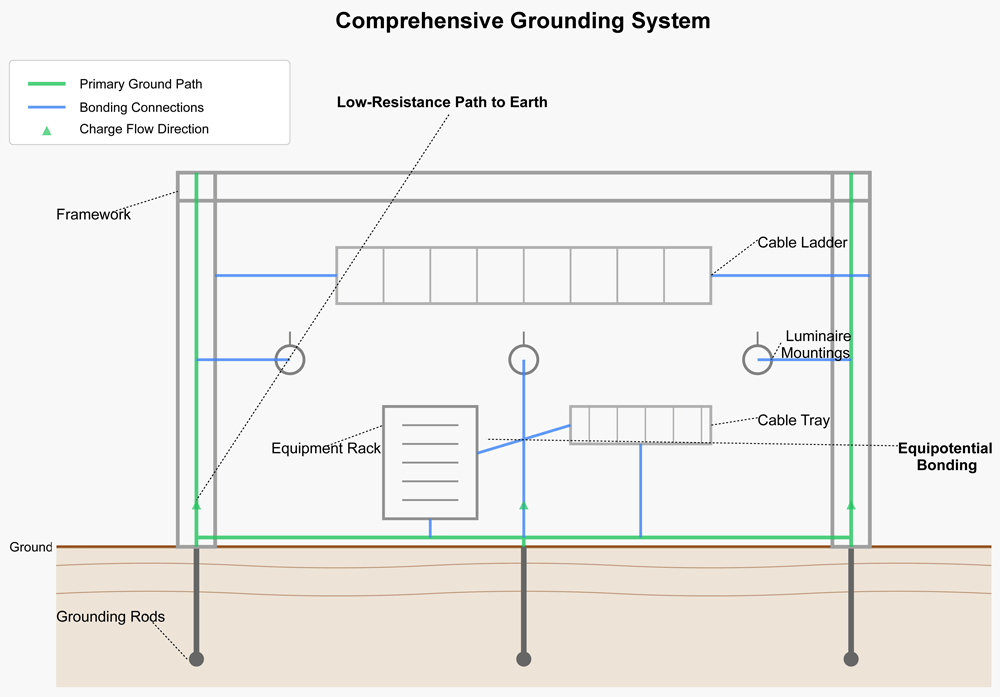
Every ESD mitigation strategy begins with a well-designed grounding system. All conductive elements in the installation — structural steel, cable ladders, luminaire mountings, and racks — must have a clear, low-resistance path to earth.
Structural grounding
Connect all structural steel, railings, and large metallic components to a common ground using grounding rods and conductors. No element should be isolated from the system.
Equipotential bonding
Bond racks, cable trays, and ESD-sensitive device substructures together so that all components share the same electrical potential. When potential is equalized across the system, static has no differential to drive a discharge.
2. Three Installation Scenarios
Metal stays
Metal stays are conductive by nature. The goal is to make each stay an active part of the grounding system rather than an isolated conductor.
- Connect each stay directly to the main grounding system using low-resistance bonding jumpers or clamps.
- Test electrical continuity at commissioning and on a regular maintenance schedule.
- Protect all connections from corrosion with appropriate coatings or enclosures. Resistance increases as corrosion progresses.
Luminaires on metal stays
Luminaire housings must be integrated into the grounding network, not treated as separate from it.
- Bond all metallic luminaire housings to their metal stays.
- Route power and data through shielded cables. Ground shields at both ends where design specifications require, or at the source.
- Use conductive mounting hardware that establishes solid electrical contact between the luminaire and the stay.
- Inspect insulation regularly. Damaged wiring is a direct path for uncontrolled discharge.
Luminaires on Plastic Covers
Plastic is an insulator. It accumulates charge through friction (triboelectric charging), and that charge has nowhere to go unless mitigation measures are in place.
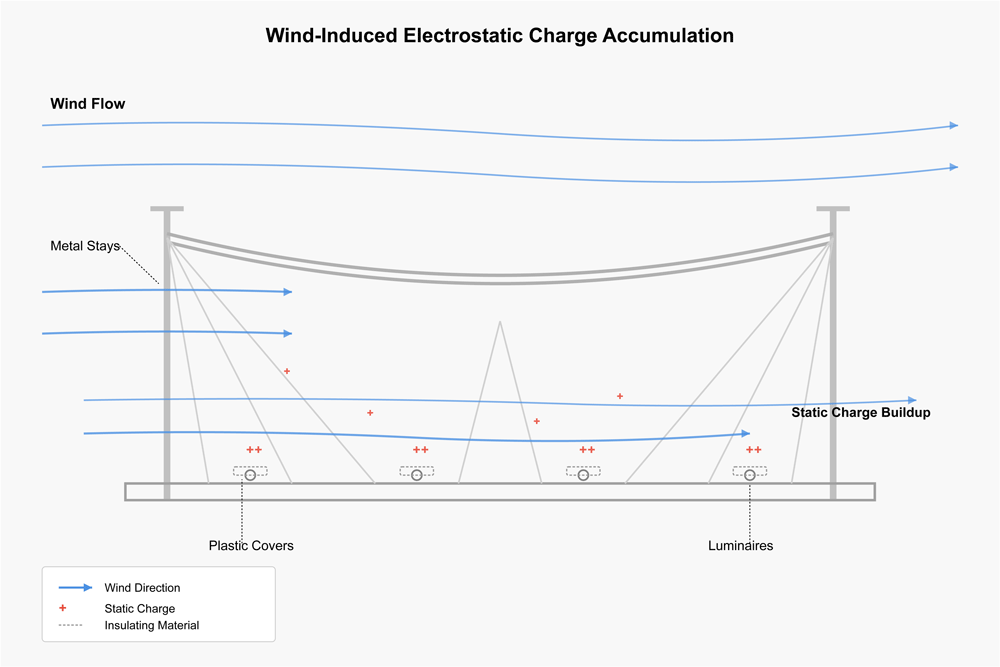
- Anti-static materials. Specify plastic covers formulated to prevent charge buildup. Static-dissipative plastics with a surface resistivity of 10⁶ to 10⁹ ohms/sq actively resist accumulation.
- Conductive treatments. Where standard plastics are unavoidable, apply anti-static sprays or conductive coatings. Reapply according to environmental conditions and manufacturer specifications.
- Proximity to grounded surfaces. Position plastic covers close to or in contact with grounded metallic surfaces where the installation allows. Proximity supports induction-based charge dissipation.
- Humidity control. In enclosed spaces housing sensitive electronics, maintain 40 to 60% relative humidity where feasible. Higher humidity reduces static buildup naturally.
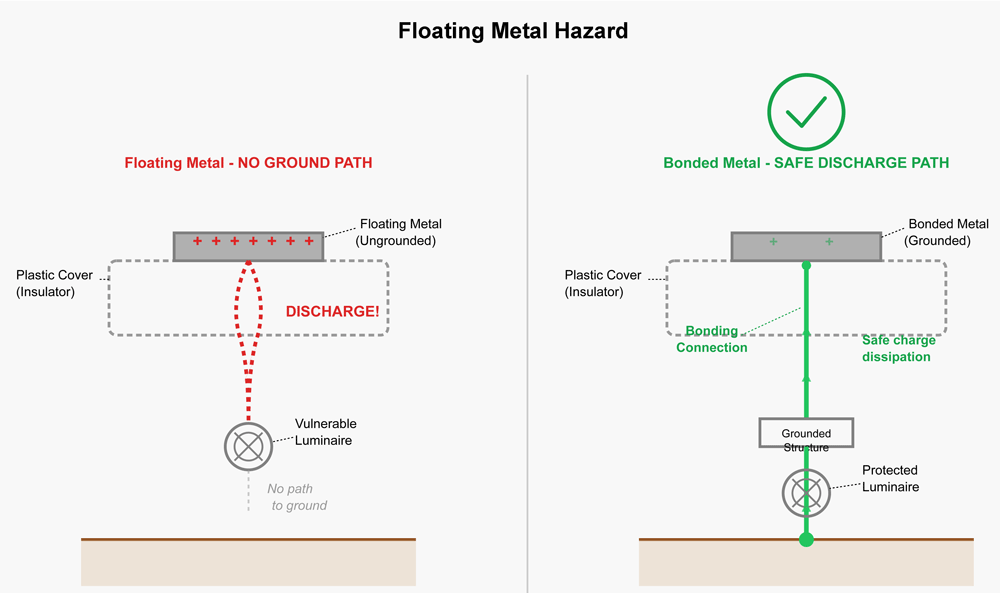
- Fastener bonding. Connect metallic fasteners securing plastic covers to the underlying grounded structure. These connection points help dissipate charge accumulating on or near plastic surfaces.
Installation
Careful installation practice is as important as the grounding design itself. These steps apply to all three scenarios above.
Pre-installation inspection
Examine every component before installation: metal stays, luminaires, plastic covers, grounding cables, and bonding jumpers. Check for damage, corrosion, or defects that could compromise ESD mitigation once the system is in place.
Grounding system verification
Before installing luminaires, confirm the main grounding system's integrity and continuity. Correct any issues at this stage. Deficiencies are significantly harder to address after the installation is complete.
Bonding connections
Clean all contact surfaces before making connections. Contamination creates resistance.
- Install bonding jumpers between adjacent metal sections, stays, and luminaire housings per design specifications.
- Tighten all connections to the appropriate torque setting.
Cable management
Route cables away from sharp edges and pinch points. Terminate and ground shielded cables correctly. Avoid tight bends that stress insulation. Cable routing decisions made at installation affect the long-term integrity of the system.
Plastic cover handling
Minimize friction during installation. Apply anti-static sprays per manufacturer instructions before covers are in place. Verify that conductive fasteners are correctly installed and bonded to the grounded structure.
4. Maintenance and Inspection
A grounding system that was effective at commissioning can degrade over time. Scheduled inspections are the only reliable way to identify issues before they affect performance.
Visual inspections
Conduct visual inspections semi-annually, or more frequently in harsh environments. Check for:
- Corrosion on grounding and bonding connections
- Loose or damaged bonding jumpers
- Damaged cable insulation
- Degraded anti-static coatings on plastic covers
Electrical continuity testing
Test all grounding and bonding connections annually, or as required by local regulations. Verify resistance from metal stays to main ground and from luminaire housings to main ground. Confirm that resistance remains below specified limits.
Coating maintenance
Reapply anti-static coatings per manufacturer recommendations or when performance shows signs of degradation. Document all reapplication dates and products used.
Documentation
Maintain records of all inspections, tests, and maintenance activities throughout the installation's service life. Complete documentation supports continuity across maintenance teams and provides evidence of due diligence.
5. Training
All personnel involved in design, installation, maintenance, and inspection should understand ESD principles and their application to LED luminaires in architectural environments. Training should cover:
- ESD principles and potential failure modes
- The mitigation measures described in this guide
- Correct use of tools and equipment for ESD-safe work
- Emergency procedures for ESD-related incidents
Electrical Safety
- Follow all applicable electrical safety procedures when working on lighting and electrical systems.
- Use appropriate Personal Protective Equipment (PPE).
- Follow lockout/tagout procedures before working on energized systems.
- Monitor environmental conditions, including humidity and weather, that affect ESD risk.
Glossary
Bonding | Intentionally connecting conductive objects with a conductor to equalize electrical potential between them. |
Electrostatic Discharge (ESD) | The sudden flow of electricity between two electrically charged objects caused by contact, electrical short, or dielectric breakdown. |
Floating Metal | Any conductive material lacking a ground path. Unable to release charge, floating metal builds up static that damages nearby sensitive components. |
Grounding (Earthing) | Connecting electrical circuits or equipment to earth, providing a low-resistance path for currents to dissipate safely. |
Metal Stays | Structural tension members, steel cables or rods, supporting bridge decks or towers. |
Plastic Covers | Non-conductive enclosures or shields protecting components or providing aesthetic finishes. |
Further Resources
The Electrostatic Discharge Association (esda.org) publishes technical resources on ESD principles, testing standards, and mitigation techniques.
YouTube provides tutorials and videos about ESD and LED lighting, including practical mitigation approaches.
Still Have Questions?
For questions about ESD mitigation in Color Kinetics installations, contact us.
How Did We Do?
Thermal protection and Color Kinetics luminaires
2-Phase Power and Color Kinetics Data Enabler Pro or Data Enabler Pro gen3
